By Huzaifa Shahid, Founder·May 21, 2026

In 2026, a professional business website costs anywhere from $500 for a basic landing page to $75,000+ for a large-scale eCommerce platform — with most small business websites landing between $2,000 and $8,000 in the US and significantly less when working with skilled teams in Asia or Eastern Europe. The exact website development cost depends on your website type, platform, features, and who you hire.
If you have ever Googled "how much does a website cost" and ended up more confused than when you started, you are not alone. The range is wild. One agency in New York quotes you $30,000, a freelancer overseas quotes you $800, and you have no idea what you actually need, what each price includes, or what is fair for your market.
This guide breaks down realistic website development pricing across the US, Europe, and Asia, explains exactly what drives cost up or down, exposes the hidden expenses most quotes leave out, and shows you how to choose the right developer without overpaying.
Before we get into the numbers, remember that cost is only half the equation — time matters just as much. For a realistic schedule, read our companion guide on How Long Does Professional Business Website Development Take in 2026.


Before we get deeper into the numbers, it is worth understanding what you are actually paying for. A website is not just a collection of attractive pages. Behind the scenes there is UX design, front-end and back-end development, hosting infrastructure, security hardening, on-page SEO, speed optimization, and ongoing maintenance — all working together to turn visitors into customers. Every one of these layers adds (or saves) money depending on how it is handled.
Here are the main factors that determine website price worldwide:
Here is the table most people are searching for — realistic 2026 website development pricing in US dollars, broken down by website type and the region where your development team is based:
| Website Type | US / Canada | Europe / UK | Asia / Middle East |
|---|---|---|---|
| Basic Landing Page | $500 – $2,500 | $400 – $2,000 | $150 – $800 |
| Small Business Website (5–10 pages) | $2,000 – $8,000 | $1,500 – $6,000 | $500 – $2,500 |
| Corporate Business Website | $5,000 – $20,000 | $4,000 – $15,000 | $1,500 – $6,000 |
| eCommerce Website (small catalog) | $8,000 – $30,000 | $6,000 – $25,000 | $2,500 – $10,000 |
| eCommerce Website (large catalog) | $25,000 – $75,000 | $20,000 – $60,000 | $8,000 – $30,000 |
| Custom Web Application | $50,000+ | $40,000+ | $15,000+ |
These ranges reflect professional, production-quality work — not the absolute cheapest options available. Lower-cost regions like South Asia, Eastern Europe, and parts of the Middle East offer genuinely excellent development talent at a fraction of US rates; the key is evaluating portfolios, process, and post-launch support rather than choosing on price alone. Match your investment to your actual business goals, not to the lowest number in an inbox full of quotes.

A lot of business owners think a business website just means a homepage with a contact form. In reality, a proper business website in 2026 — one that actually ranks on Google and converts visitors into leads — should include every item on this list as standard, not as a paid extra:
When someone offers you a very low-cost website with all of the above included, ask questions before signing. What platform are they using? Is it a purchased template or designed from scratch? Will you fully own the files, domain, and hosting accounts after the project is complete? Is anything on this list billed separately later? These questions save you serious money and headaches down the road.

An eCommerce website is essentially a complete digital store — and building one properly requires significantly more engineering than a regular business website. Every product page, payment flow, and order notification is revenue infrastructure. Cutting corners here does not just hurt your search rankings; it directly loses you sales and exposes customer payment data to risk. That is why eCommerce website development costs 2 to 3 times more than an informational business website of similar size.
Core eCommerce features driving the investment:
The platform you choose shapes your long-term website development cost — not just what you pay today, but what you will spend on subscriptions, plugins, transaction fees, and maintenance over the next three to five years:
| Platform | Best For | Cost Implication |
|---|---|---|
| Shopify | Quick eCommerce launch, low technical hassle | Monthly subscription ($39–$399+) plus transaction fees |
| WooCommerce on WordPress | Flexibility, content-heavy stores, SEO control | Lower upfront cost, more ongoing development needed |
| Magento / Adobe Commerce | Large enterprise stores with complex catalogs | High build cost, requires expert developers |
| Custom Built (React, Next.js, etc.) | Unique requirements, maximum performance, no platform limits | Highest upfront investment, most scalable long term |
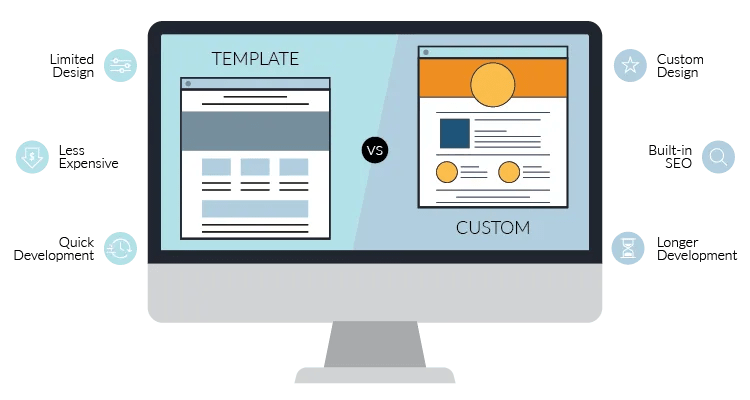
Here is the honest truth no sales page will tell you: a low-cost website can absolutely work — if your expectations and your requirements are genuinely aligned. The problem is that most businesses outgrow a cheap website within 12 to 18 months, and rebuilding from scratch costs more than building it right the first time.
The real cost of a low-cost website is rarely the upfront price. It is the leads you lose because the site is slow, the customers who never find you on Google, and the rebuild you pay for twice. Cheap and value are not the same thing — in any market, in any currency.

The web is always evolving, and 2026 has brought several expectations that are now considered standard rather than optional — across the US, Europe, the Middle East, and every serious market in between:
These trends do not always add dramatically to upfront website development cost, but they should absolutely be part of the conversation with any developer or agency you hire — anywhere in the world.

Whether you are hiring a freelancer in Asia, a boutique studio in Europe, or a full-service agency in the US, here is exactly what to evaluate before signing anything:
Get at least three quotes, compare scope rather than just price, and watch out for anyone who promises the world for an unrealistically low number — in any currency, that promise always costs more later.
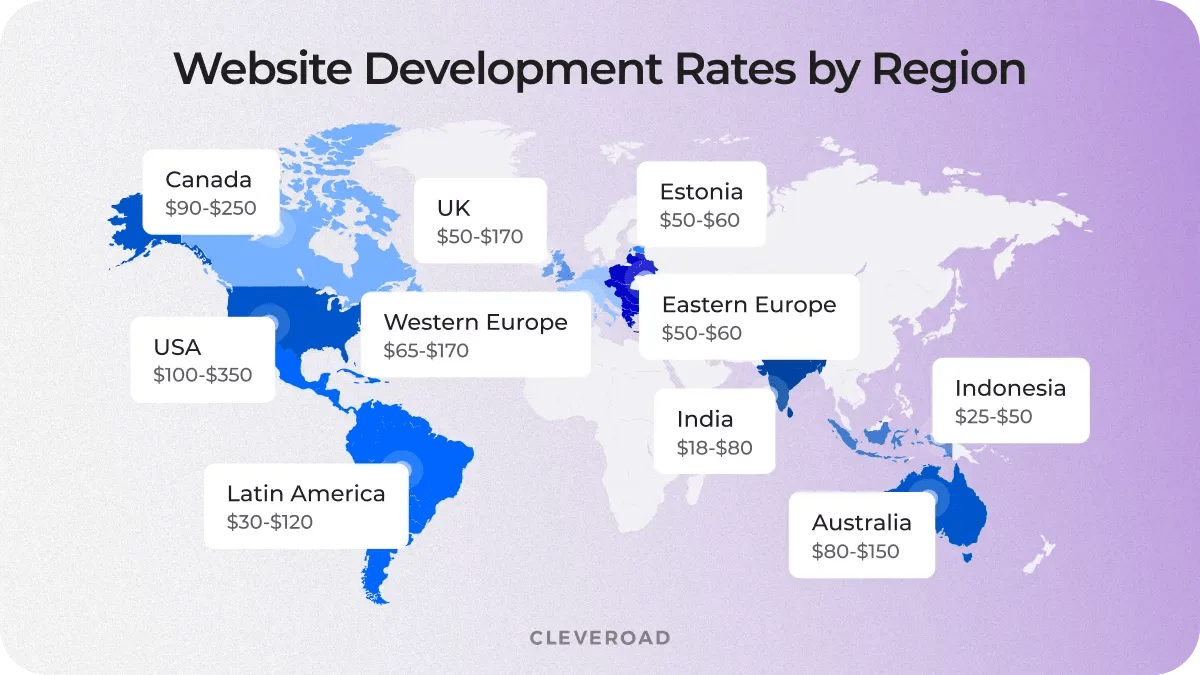
Website pricing globally varies enormously by region, expertise, and service level. Freelancers on platforms like Fiverr and Upwork — and independent developers across South Asia, Eastern Europe, and Latin America — often deliver budget-friendly builds, while established agencies in the US, UK, and UAE typically charge premium rates in exchange for stronger design systems, structured development processes, deeper SEO optimization, and reliable ongoing support. The smart move is not picking the cheapest or the most expensive option — it is matching the provider's strengths to your actual business stage and growth goals.
Low-cost website options worldwide typically include:
For growing businesses, it is almost always worth stretching the budget slightly to work with a developer who genuinely understands SEO, performance, and long-term scalability. A website that costs 30% more but actually ranks on Google and converts visitors is infinitely more valuable than a cheap one that sits invisible online — that is true in dollars, euros, dirhams, and every other currency.
Website development cost in 2026 ranges from around $500 for a basic landing page to $75,000+ for large eCommerce platforms. A professional small business website typically costs $2,000 to $8,000 in the US, $1,500 to $6,000 in Europe, and $500 to $2,500 with skilled teams in Asia or the Middle East. The honest answer depends on your goals, platform, and who you hire — always compare scope, not just price.
Globally, a professional 5 to 10 page small business website with responsive design and basic SEO averages $2,000 to $8,000 in North America, $1,500 to $6,000 across Europe and the UK, and $500 to $2,500 from experienced teams in Asia and the Middle East. Regional differences reflect labor costs, not necessarily quality — many businesses worldwide get excellent results working with skilled offshore development partners.
A standard business website package in 2026 should include homepage design, service or product pages, an about page, a contact page with a working form, mobile responsiveness, on-page SEO, SSL security, Google Analytics setup, and social media integration. Anything less leaves value on the table. Always confirm exactly what is included in writing before paying any deposit.
An eCommerce website typically costs 2 to 3 times more than a standard business website — starting around $8,000 in the US, $6,000 in Europe, and $2,500 with teams in Asia for a small catalog store. The premium covers product pages, shopping cart and checkout functionality, secure payment gateway integration, order management, customer accounts, and inventory handling. The larger and more complex your store, the higher the total website development cost.
Beyond the build itself, budget for annual domain registration ($10–$50), web hosting ($10–$100+/month), premium plugin or theme licenses, professional copywriting, stock photography, email hosting, and ongoing maintenance ($50–$300/month). These hidden costs typically add 15 to 30% to first-year website ownership. Plan for at least 12 months of operational costs when calculating your total website development investment.


Sep 22, 2026
Facial recognition privacy rules in 2026 explained: BIPA, CCPA, EU AI Act, consent, retention, safer alternatives and a practical implementation checklist.
By Muhammad Hamza · CTO

Your trusted partner in innovative web solutions, delivering tailored development, design, and marketing services to elevate your digital presence and business growth.
info@clyrixdigital.com
© 2026 Clyrix Digital. All rights reserved.