By Muhammad Hamza, CTO·Sep 20, 2026
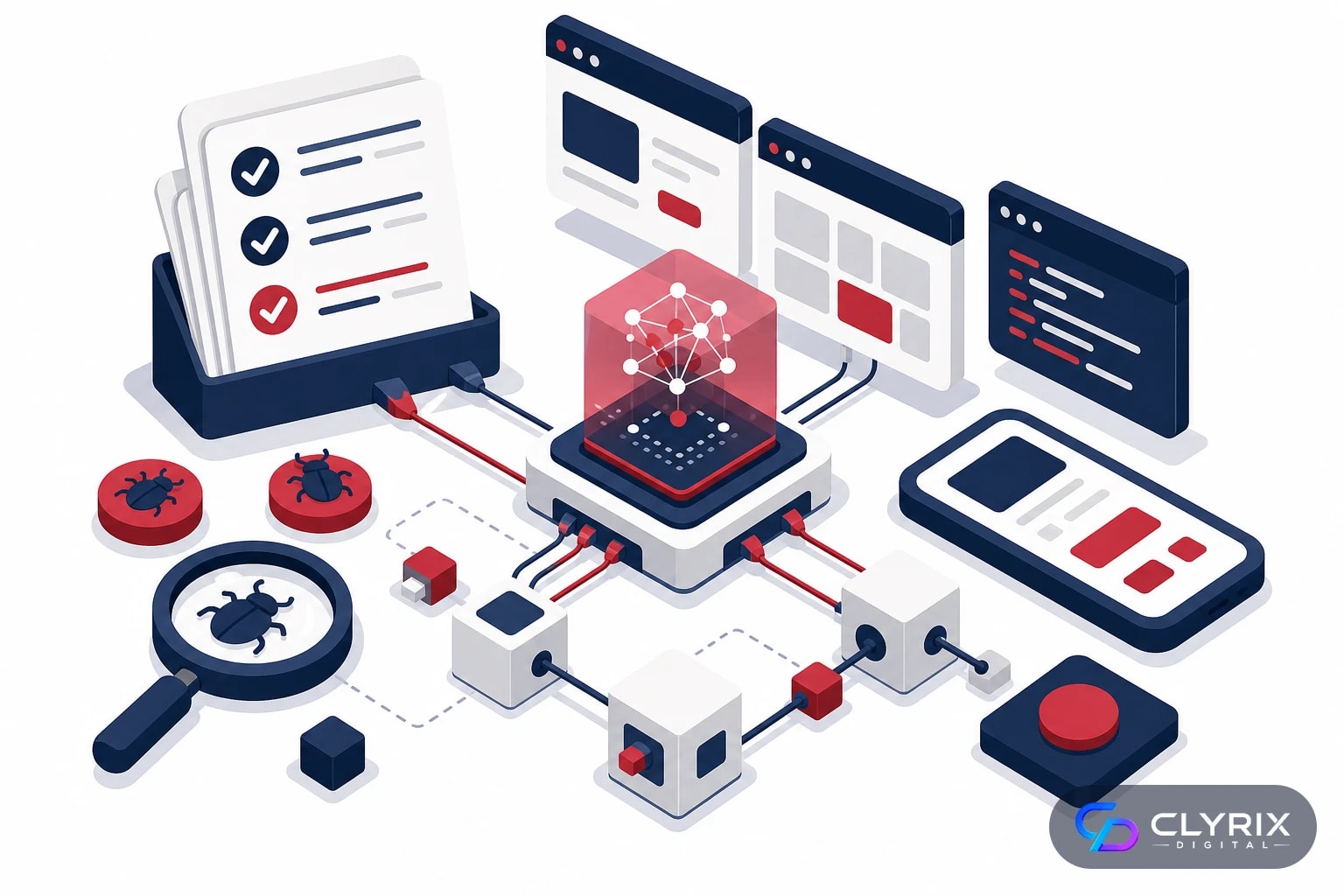
Autonomous testing uses AI to generate, run, maintain and prioritize software tests with less manual scripting than traditional automation. In 2026, it is most useful for regression testing, UI change detection, API checks, test data creation and triage, but it still needs human QA ownership for risk, compliance and release decisions.
For a startup founder, CTO or SME owner, the practical question is not whether autonomous testing sounds impressive. The real question is whether it can reduce release risk, shorten QA cycles and lower maintenance effort without creating a black box your team cannot trust.
The answer depends on your product maturity. A SaaS dashboard with frequent UI changes, a customer portal with complex workflows or a mobile app with repeated regression cycles can benefit quickly. A small brochure website or an MVP still changing every day may not need a full autonomous QA setup yet.
In our delivery experience, autonomous testing works best when it extends a disciplined QA foundation: clear acceptance criteria, stable environments, CI/CD, good test data and known business risks. If those basics are missing, AI will accelerate confusion. If they are present, AI-assisted QA can help small teams test more like larger engineering organizations. Teams building custom platforms can also pair QA strategy with custom app development planning so testability is designed in from the start.
20–40%
Common regression-cycle reduction target in early AI QA pilots
30–60%
Typical share of automation effort spent on maintenance in many teams
2–6 weeks
Practical pilot window for one product workflow
5–15%
Reasonable initial QA budget allocation for AI testing experiments
Traditional automation follows scripts written by engineers or QA automation specialists. Those scripts click known paths, call known APIs and assert expected outcomes. They are powerful, but brittle when user interfaces, test data or business rules change frequently.
Autonomous testing adds AI models, agents and learning systems around that automation. Instead of only executing predefined scripts, the system can suggest test cases from requirements, inspect UI changes, update selectors, decide which tests are most relevant to a code change and summarize failures for developers.
This does not remove the need for Selenium, Playwright, Cypress, Appium, API testing or CI/CD. In many cases, autonomous QA sits on top of those tools. The value comes from reducing the manual work around them: test design, maintenance, prioritization and triage.
A useful way to evaluate the difference is to ask who makes the decision. In traditional automation, humans decide nearly everything before the test runs. In autonomous testing, AI can recommend or perform some actions, but humans still define risk, acceptance standards and release gates.
The main differences usually show up in these areas:
The trade-off is governance. The more autonomy you allow, the more you need review rules, audit logs and clear ownership.
This comparison helps buyers understand where autonomous testing adds value and where standard automation remains enough.
| Area | Traditional automation | Autonomous testing | SME impact |
|---|---|---|---|
| Test design | Human-written cases | AI-suggested coverage | Faster planning |
| Script maintenance | Manual selector fixes | Self-healing locators | Less rework |
| Regression scope | Fixed test suite | Risk-based selection | Shorter cycles |
| Failure triage | Manual log review | AI summaries | Quicker debugging |
| Release control | Human decision | Human with AI evidence | Better confidence |
| Best fit | Stable workflows | Changing products | Growing teams |
Autonomous testing should complement, not erase, proven QA engineering practices.
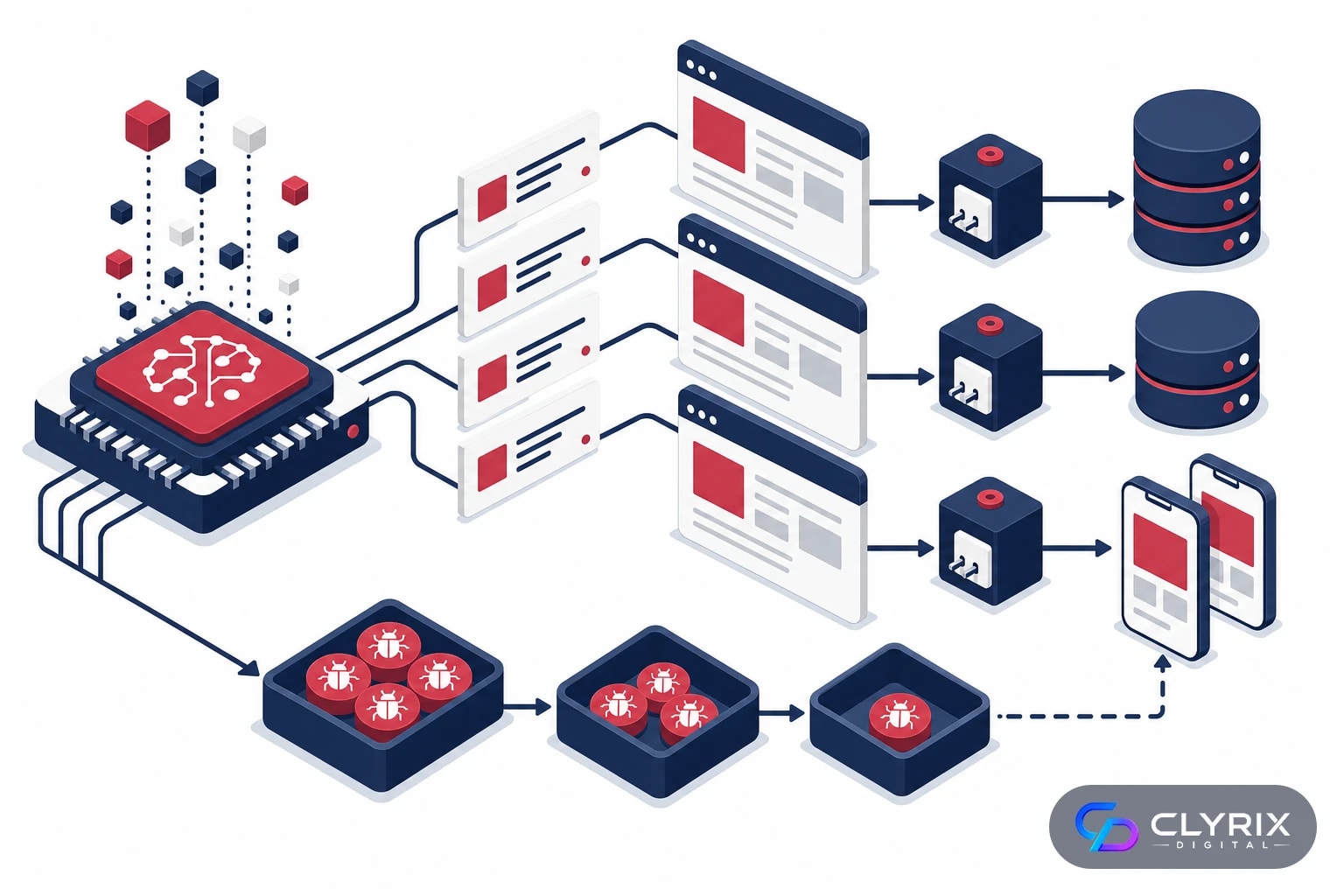
AI test generation is one of the clearest entry points for autonomous testing. Modern tools can read acceptance criteria, user stories, API schemas, design files or existing sessions and propose test cases. Some can also create executable scripts for frameworks such as Playwright or Cypress.
This is valuable for SMEs because test design is often the bottleneck. A small QA team may know the product well but lack time to document every edge case. AI can quickly produce a first draft of positive paths, negative paths, boundary conditions and role-based scenarios.
However, generated tests are not automatically good tests. They can over-test low-risk screens, miss commercial logic or assert superficial outcomes. For example, checking that a checkout button exists is less valuable than verifying taxes, discounts, payment authorization and order creation.
The best results come when AI receives structured inputs: clear requirements, API contracts, data rules, known personas and examples of critical workflows. If your product roadmap includes new AI features, a partner offering AI development services can help connect test generation with product architecture rather than treating QA as an afterthought.
AI-generated test cases are especially useful for:
Do not accept generated tests without review. Require a QA lead or product owner to approve the scenarios that matter most to revenue, security and customer experience.
Self-healing tests are designed to reduce false failures caused by harmless UI changes. If a button ID changes, a label moves or a component is refactored, the test tool may identify the same element through nearby attributes, visual similarity or DOM context and keep the test running.
For teams shipping weekly or daily, this can be a major maintenance win. Front-end frameworks, design systems and product experiments often break brittle locators even when the user journey still works. Self-healing reduces the time QA engineers spend updating selectors after every small change.
But self-healing must be handled carefully. If a test silently adapts to the wrong element, it can create false confidence. If a checkout test heals itself from one payment button to another, the run may pass while the real business flow is broken.
A good implementation logs every healed action, marks it for review and separates safe changes from risky changes. For example, a changed CSS class may be low risk, while a changed payment flow, permission state or data calculation should require human approval.
Use self-healing when the failure is likely cosmetic or structural, such as:
Do not allow self-healing to automatically approve tests for payments, healthcare workflows, legal consent, access control or financial calculations without review.
The market is crowded, so SMEs should buy by capability rather than buzzword. Many teams combine two or three categories instead of adopting one giant platform.
| Tool category | What it does | Best for | Watch out for |
|---|---|---|---|
| AI test generation | Drafts scenarios | New features | Shallow assertions |
| Self-healing UI | Repairs locators | Fast UI changes | False confidence |
| Visual testing | Detects layout shifts | Design systems | Noisy diffs |
| API testing AI | Expands endpoint checks | SaaS platforms | Poor test data |
| QA agent | Plans and triages | Mature teams | Governance gaps |
| Test analytics | Ranks flaky tests | Large suites | Bad metrics |
Before buying, ask vendors how their model explains decisions, stores data and integrates with your existing CI/CD stack.
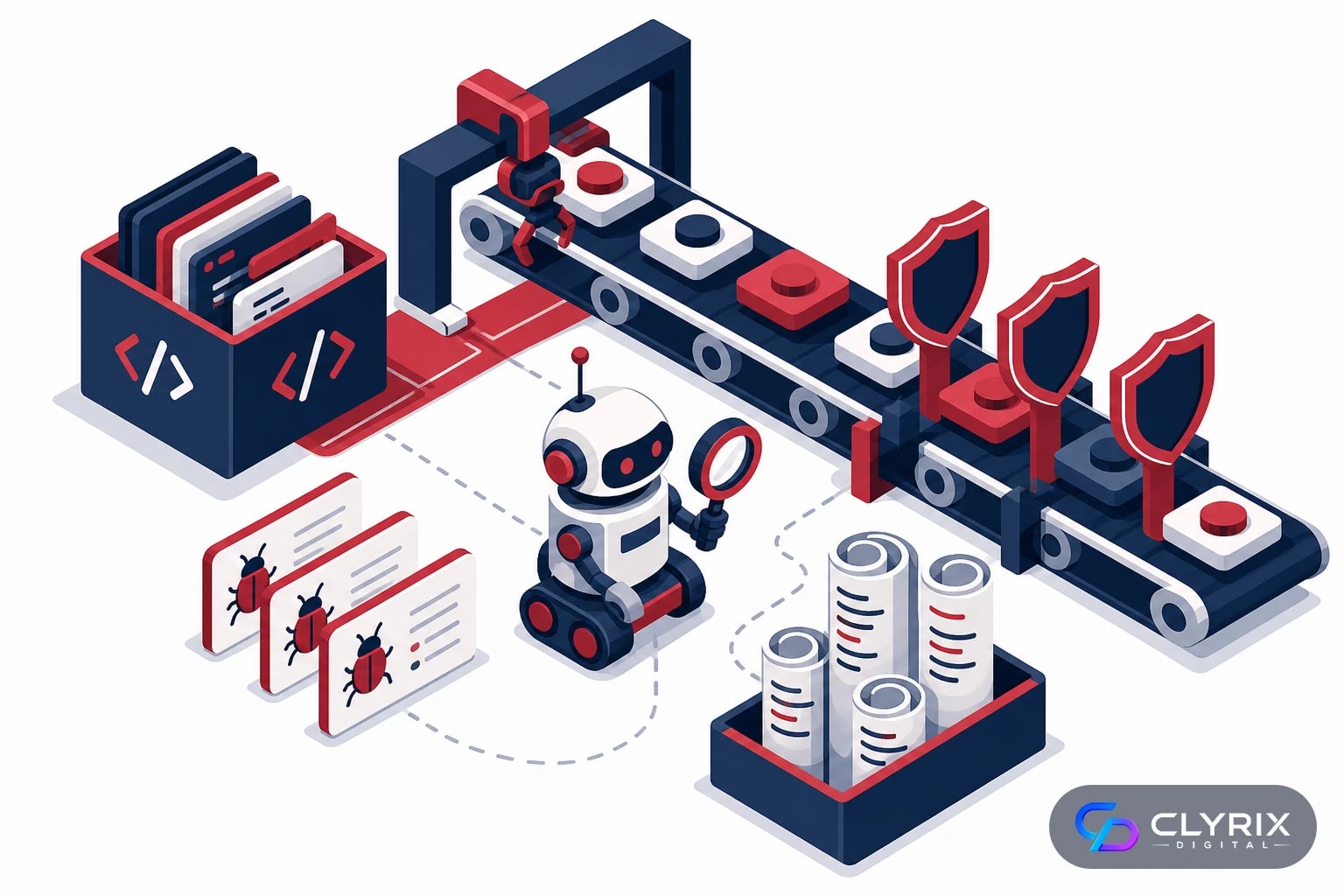
Autonomous QA agents go beyond generating individual tests. They can monitor a pull request, inspect changed files, select relevant tests, run them, read failures, compare screenshots, create bug reports and recommend next actions. In mature environments, they act like tireless QA coordinators.
The strongest use cases are repetitive but judgment-heavy tasks. For example, an agent can identify that a change to billing logic should trigger subscription, invoice, coupon and cancellation tests. It can then summarize which failures are likely code issues versus test-environment problems.
This is different from customer-facing AI agents. QA agents work inside the software delivery lifecycle, interacting with repositories, CI/CD pipelines, test environments and issue trackers. If your team is evaluating broader agent architecture, Clyrix Digital’s guide to AI agent development cost gives useful budgeting context.
The risk is over-delegation. An agent should not decide to ship a release alone. It should provide evidence, reduce noise and accelerate human decisions. That is especially important for products subject to HIPAA, SOC 2, CCPA, PCI DSS, FDA guidance or enterprise customer security reviews.
Autonomous QA agents can support several internal workflows:
For regulated workflows, keep auditable records of what the agent ran, what it changed and who approved release decisions. Official guidance from agencies such as the Federal Trade Commission reinforces the need to avoid misleading claims about automated systems.
Autonomous testing usually changes QA economics in three places: test creation, test maintenance and regression execution. It does not instantly eliminate QA spend. Instead, it can shift budget from repetitive upkeep to higher-value test strategy, exploratory testing and release risk analysis.
For a small US-based SaaS or web application team, a focused pilot may cost a few thousand dollars in tool subscriptions and setup time. A broader implementation involving CI/CD integration, test data management, role-based coverage and reporting can reach five figures. Enterprise-scale programs cost more because of security, governance, multiple environments and compliance documentation.
The return is typically measured in fewer flaky failures, shorter regression cycles, earlier bug detection and less time spent updating scripts after UI changes. Industry surveys have long reported that software defects cost more to fix later in the lifecycle, and autonomous testing is most useful when it catches issues before release.
Do not evaluate ROI only by counting manual QA hours saved. The larger commercial value may be faster releases, fewer customer-facing incidents, better developer focus and reduced risk during high-stakes launches.
Cost drivers include:
If you are also budgeting adjacent engineering work, compare QA automation scope with related integration efforts such as API integration cost because test complexity often follows integration complexity.
A successful rollout is usually narrow, measurable and reversible. Start with one workflow that matters commercially, such as signup, quote generation, subscription billing, booking, checkout, claims intake or admin reporting. Avoid starting with your most chaotic area unless you are also prepared to fix product and environment stability.
The checklist below reflects how we typically think about adoption in delivery planning. The goal is to prove value without disrupting releases. Run the autonomous tests beside existing QA at first, compare results and only then decide what to replace or expand.
If you are building a new product, bake testability into architecture from the beginning. Stable selectors, API contracts, seed data, clear logs and predictable environments make AI-assisted QA far more effective. For web platforms, this can align naturally with web development services that include performance, accessibility and maintainability planning.
After the pilot, decide whether to expand, pause or redesign based on evidence, not vendor demos.
Pick a workflow with clear business value and repeatable steps. Good candidates include login, billing, account setup, product search, quote requests, order placement and dashboard reporting.
Measure current regression time, flaky-test rate, escaped bugs, maintenance hours and release delays. Without a baseline, it is hard to prove autonomous testing improved anything.
Integrate with source control, CI/CD, test environments and issue tracking. Autonomous testing becomes more useful when it sees code changes, requirements, logs and prior failures.
Treat generated tests as assets that need review, naming standards, ownership and cleanup. Unreviewed AI output can create bloated suites that slow releases instead of improving them.
If the pilot reduces maintenance, catches meaningful defects or shortens regression, expand to adjacent workflows. If not, fix test data, requirements or environment issues before buying more licenses.
Autonomous testing is not equally valuable for every product. Use this quick decision table before committing budget.
| Situation | Recommendation | Reason |
|---|---|---|
| Frequent UI changes | Strong candidate | Maintenance burden is high |
| Large regression suite | Strong candidate | Prioritization saves time |
| Early throwaway MVP | Wait | Requirements still unstable |
| Compliance-heavy SaaS | Use carefully | Needs audit controls |
| Simple brochure site | Usually skip | Low testing complexity |
| Mobile app releases | Pilot selectively | Device coverage helps |
For mobile-heavy products, connect autonomous QA planning with realistic device and release timelines. The guide on [mobile app development timelines](https://clyrixdigital.com/blogs/how-long-mobile-app-development-take/) is a useful companion.
The biggest mistake is assuming autonomous means accountable. It does not. Your company remains responsible for quality, privacy, accessibility, security and customer impact. AI can recommend, summarize and adapt, but leadership still owns release decisions.
US companies should consider obligations around ADA accessibility, CCPA privacy, HIPAA healthcare data, SOC 2 controls, PCI DSS payment data and FTC expectations for truthful technology claims. If a test tool processes customer data, screenshots, logs or production-like records, your vendor review should include data retention, model training, access controls and breach notification terms.
Google’s own guidance on quality and user experience has consistently emphasized useful, reliable experiences over shortcuts. In QA terms, that means autonomous testing should improve real product quality, not just generate dashboards that look mature. You can review broader developer practices through Google Search Central when testing SEO-sensitive web changes.
There are also engineering risks. AI-generated tests may be duplicated, brittle, too broad or too shallow. Self-healing may mask a real defect. Visual AI may flag harmless changes and miss business logic failures. QA agents may open noisy tickets if they lack product context.
Keep these controls in place:
For healthcare workflows, pair autonomous QA with a compliance checklist such as the HIPAA-compliant AI chatbot checklist if patient data or clinical interactions are involved.
Autonomous testing is one of the most practical AI use cases in software delivery because it targets a real pain: modern teams ship faster than traditional QA processes can comfortably support. AI test generation, self-healing tests and autonomous QA agents can reduce maintenance, speed regression cycles and expose risks earlier.
The best next step is a focused pilot tied to one business-critical workflow and a small set of metrics. If the pilot improves reliability without creating governance problems, expand gradually. If you need help assessing fit, an experienced partner such as Clyrix Digital can review your QA process, product architecture and release goals before you invest in tools.
Autonomous testing is the use of AI to help generate, execute, maintain and prioritize software tests. Unlike traditional automation, it can recommend test coverage, repair some broken locators, analyze failures and select tests based on code changes. It still requires human QA oversight for business risk, compliance and final release decisions.
No. Test automation runs predefined scripts created by humans. Autonomous testing adds AI capabilities around those scripts, such as test generation, self-healing, failure triage and risk-based test selection. In practice, most teams use autonomous testing as an enhancement to existing frameworks like Playwright, Cypress, Selenium or API test tools.
A small pilot may cost a few thousand dollars in tools and setup time, while a broader implementation can reach five figures depending on integrations, environments, test data and compliance needs. The biggest cost drivers are the number of workflows, existing automation quality, CI/CD maturity and the level of human review required.
AI-generated tests should not fully replace manual QA. They can speed up coverage creation and reduce repetitive work, but humans are still needed for exploratory testing, product judgment, accessibility review, edge-case thinking and release risk decisions. The strongest model is AI-assisted QA, where testers spend less time maintaining scripts and more time improving quality.
Self-healing tests automatically adjust when minor UI changes break selectors or element references. For example, if a button’s technical ID changes but its purpose remains the same, the test may continue using visual or structural clues. Teams should log and review healed changes because self-healing can accidentally hide real defects in critical workflows.
Avoid or delay autonomous testing when your product is still a throwaway MVP, requirements change daily, environments are unstable or no one owns QA strategy. AI will not fix poor acceptance criteria, bad test data or unclear release standards. Start only when you can define a workflow, baseline current QA performance and review AI output responsibly.

Your trusted partner in innovative web solutions, delivering tailored development, design, and marketing services to elevate your digital presence and business growth.
info@clyrixdigital.com
© 2026 Clyrix Digital. All rights reserved.